
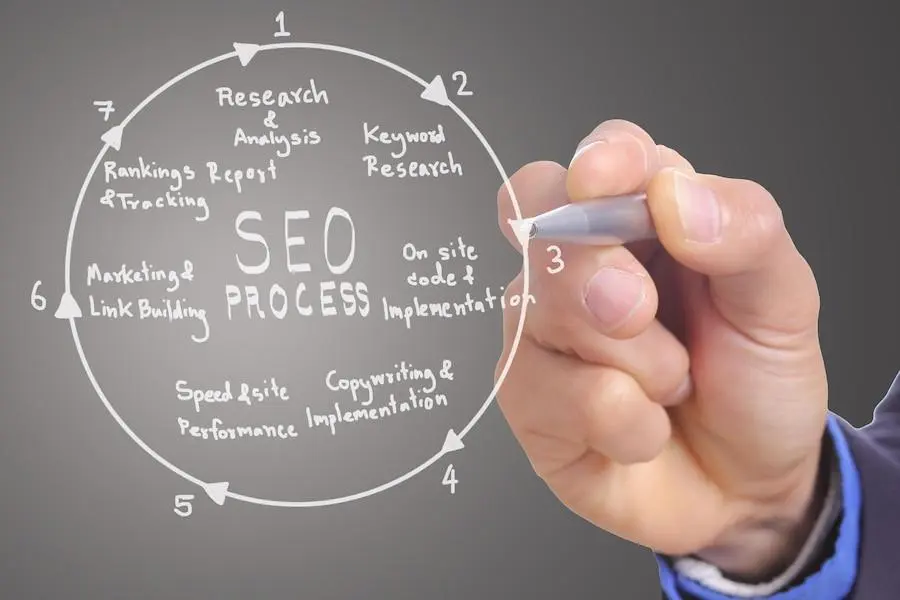
Organic SEO services are crucial in shaping online visibility and boosting website rankings. In digital marketing, SEO stands for “Search Engine Optimization.” Waterbox Media delves into the meaning of SEO and explores key concepts related to optimizing content for search engines.
Understanding Search Engine Optimization
When you delve into SEO, you equip your website with the tools necessary to enhance its visibility on search engines, which results in higher organic search rankings and increased traffic.
The Basics of SEO
SEO stands for Search Engine Optimization. It’s a methodology comprising various strategies, techniques, and tactics used to increase the number of visitors to your website by obtaining a high-ranking placement in the search results page of a search engine (SERP) — including Google, Bing, Yahoo, and other search engines. SEO helps ensure your site is accessible to a search engine and improves the chances that the site will be found by the engine.
- Visibility: Making your website more recognizable to search engines.
- Content: Creating and structuring content around keywords that your potential audience uses.
- Links: Building a network of quality links that point back to your site, known as backlinks.
- Algorithm: Understanding search engine algorithms to tailor your site to what search engines deem important.
To learn about different types of SEO, check out our article: “Types of SEO Services: A Complete List to Enhance Your Online Presence.”
SEO Entities and Acronyms
Many acronyms and entities navigate the world of SEO, each representing a significant component of the optimization puzzle.
- SERP (Search Engine Results Page): The page you see after conducting a search.
- Keywords (KW): Terms that users enter into search engines.
- Backlinks (BL): Links from one website to a page on another website.
- Click-Through Rate (CTR): The percentage of users who click a link compared to the total users who view a page.
- Conversion Rate Optimization (CRO): The process of increasing the percentage of users who perform a desired action on a website.
- PageRank (PR): An algorithm used by Google Search to rank web pages in their search engine results.
By mastering these components, you can effectively improve your site’s ranking and optimization in organic search results, leading to greater visibility and potential traffic (TR). Remember, each component from algorithms (AL) to search experience optimization (SE) plays a role in how well your content performs in the digital realm.
Technical Aspects of Search Engine Marketing
Before diving into specific tactics, understand that SEO is a multifaceted strategy aiming to make your website more visible and attractive to search engines. You’ll work on improving your site’s structure, enhancing content relevancy, and building external recognition.
On-Page SEO
On-Page SEO involves optimizing individual web pages to rank higher in search engines. It’s your control center for SEO.
- HTML: Ensure your site uses clean and semantic HTML.
- Meta Description: Craft compelling meta descriptions with targeted keywords.
- Alt Text: Use descriptive alt text for your images to improve accessibility and relevance.
- URL Structure: Keep URLs concise, structured, and keyword-rich.
Technical SEO
Technical SEO ensures that your site meets the technical requirements of modern search engines for improved crawling and indexing.
- HTTPS: Migrate to HTTPS for secure connections.
- Site Code: Minimize and optimize your site’s code for faster load times.
- Site Structure: Organize your site logically.
- Indexing: Employ XML sitemaps and robots.txt to guide search engines through your site.
Off-Page SEO
Off-Page SEO refers to the actions taken outside of your website to impact your rankings within search engine results.
- Backlinks (IBL): Gain quality inbound links from reputable sources.
- Social Media: Leverage social media platforms to boost your site’s visibility and trust.
- Trust: Establish trust with search engines by consistently providing high-quality content and user experiences.
SEO Strategies
To excel in search engine optimization (SEO), you need to master several key strategies that will enhance your website’s ranking and visibility. Implementing these tactics effectively will help you reach your target audience through organic search results.
Keyword Research and Optimization
- Relevance: Identify keywords that are highly relevant to your content and audience. Use tools to analyze search volume and competition.
- Placement: Integrate the keywords naturally into titles, meta descriptions, headings, and throughout your web pages.
Keyword research is the cornerstone of SEO. It involves identifying the terms and phrases your potential audience uses when searching for products or services related to your business. Proper keyword optimization ensures that your content is discoverable and ranks well for the right queries.
Content Strategy
- Quality: Prioritize high-quality, valuable content that addresses your audience’s needs.
- Variety: Diversify your offerings with blogs, videos, and news articles.
- Update: Keep content fresh and up-to-date to maintain relevance and ranking.
A robust content strategy is pivotal to your SEO success, with a focus on creating content that resonates with your audience and provides value. Content variety, such as incorporating blogs, videos, and news updates, can enhance user engagement and cater to different preferences, potentially boosting your site’s ranking.
Link Building Strategies
- Quality over Quantity: Aim for high-quality backlinks (BL) rather than a higher number of low-quality ones.
- Relevance: Seek links from industry-relevant sources.
- Balance: Strive for a mix of different types of links, including both inbound links (IBL) and internal linking within your site.
Link building involves acquiring hyperlinks from other websites to your own. High-quality, relevant backlinks can significantly improve your site’s authority and ranking. A strategic approach to link building is to foster relationships with authoritative sources and create link-worthy content that encourages organic link acquisition.
SEO Performance
Understanding SEO performance is essential to ensuring that your optimization efforts are effective and deliver tangible results. You’ll want to track various metrics that reflect your website’s success in search engines. These metrics will guide your strategy and reveal areas that need improvement.
Measuring Success: CTR, ROI, Conversion, and Other Metrics
To accurately measure SEO success, you need to focus on specific, quantifiable metrics:
- Traffic: Assess the volume of visitors coming to your site from search engines. An increase in organic traffic usually suggests successful SEO.
- Rankings: Keep track of where your pages are positioned in the SERPs for targeted keywords. Higher rankings can lead to more visibility and traffic.
- Conversion Rate: Monitor how well your traffic is achieving desired actions, like making purchases or signing up for newsletters. Higher conversion rates indicate that your traffic is valuable and engaged.
- CTR (Click-Through Rate): Evaluate the percentage of users who click on your website’s listing in the search results. A strong CTR can signal that your titles and descriptions are compelling.
- ROI (Return on Investment): Calculate the profitability of your SEO activities by comparing your earnings to your investment.
- HTTPS: Ensure your website uses HTTPS, as it’s a known ranking factor and important for user trust and security.
SEO Tools and Software
Several SEO tools and software can help you track and analyze your website’s performance:
- Google Analytics (GA): This free tool from Google offers comprehensive insight into your website traffic and user behavior.
- Search Engine Marketing (SEM) Tools: Platforms like SEMrush or Ahrefs provide a host of functionalities, including keyword research, site audits, and competitor analysis.
- SEO Tools: Other tools, like Moz’s Open Site Explorer (OSE), help in examining backlinks, which are crucial for SEO.
- Analytics Software: More sophisticated analytics software can reveal in-depth patterns, helping you make data-driven decisions to optimize your SEO strategy.
Leverage these tools to gain actionable insights, keep an eye on your website’s health, and tweak your SEO plan for better performance.
To learn about website traffic, check out our article: “What Is Website Traffic: Understanding Web Traffic Dynamics.”
User Experience (UX) and SEO
Your strategy for SEO (Search Engine Optimization) should always consider the user experience (UX) as a central component. Not only does UX impact your audience’s interaction with your website, but it also influences your site’s organic search performance.
The Role of UX in SEO
User Experience (UX) is integral to SEO for several reasons. The synergy between UX and SEO practices can lead to better engagement, lower bounce rates, and higher organic rankings. Here is a breakdown of why UX matters in SEO:
- Engagement: Ensuring an intuitive and positive user experience encourages visitors to interact more with your content, which can lead to increased time on site and page views.
- Bounce Rate: A site that is difficult to navigate may cause visitors to leave quickly. Search engines can interpret high bounce rates as a sign that content is not fulfilling user needs, potentially leading to lower rankings.
- Organic Search Performance: Google’s algorithm updates increasingly prioritize user-centric metrics. A site optimized for UX is better positioned to rank well in organic search results.
Mobile SEO
When it comes to Mobile SEO, the focus is on optimizing the browsing experience for users on smartphones and tablets. Two key aspects where UX intersects with Mobile SEO are:
Responsive Design:
- A responsive website automatically adjusts to fit the user’s device, providing an optimal viewing experience across a range of devices.
- This adaptability is critical as Google uses mobile-first indexing, meaning it predominantly uses the mobile version of the content for indexing and ranking.
Mobile Page Speed:
- Load times are crucial on mobile devices. Even a one-second delay in mobile load times can impact conversion rates and engagement.
- Aim to enhance your site’s speed by optimizing images, leveraging browser caching, and reducing redirects.
By concentrating on providing a seamless and responsive user experience for mobile users, you’ll cater to your audience effectively and align with search engine preferences, ultimately boosting your site’s Mobile SEO performance.
Local And Industry-Specific SEO
In today’s digital landscape, optimizing your online presence for local searches and specific industries is critical. It ensures your products and services are visible to the right audience.
Local SEO Practices
Local SEO targets your business’s visibility in search results for a particular geographic location. You will want to make sure your business’s Name, Address, and Phone Number (NAP) are consistent across all online platforms. Key practices include:
- Google My Business Optimization: Ensure your Google My Business listing is accurate, complete, and optimized for your target keywords.
- Local Keywords: Integrate keywords that reflect your local area into your website’s content and meta tags.
- Local Citations: Build citations on local business directories and platforms relevant to your region and industry.
- Online Reviews: Encourage reviews from your customers on platforms like Google and Yelp to improve credibility and visibility in local search results.
SEO in Different Industries
SEO strategies can differ vastly between industries. Each industry has unique attributes and will require a tailored approach. Here are a few considerations:
- Keyword Relevance: Determine and use keywords that your potential customers in your specific industry are searching for.
- Competitor Analysis: Understand how competitors in your industry are positioning themselves and optimize your site to compete effectively.
- Content Customization: Create content that resonates with industry-specific audiences, addressing their unique needs and pain points.
- Technical SEO: Keep your website’s technical elements, such as site speed and mobile optimization, up to standard to benefit from organic search across various search engines like Google and Bing.
By focusing on these aspects, you can sharpen your SEO strategy to cater to your local market and specific industry, positioning your business effectively within organic search results.
Future of SEO
As search engines continuously evolve, your understanding of the future of SEO is pivotal for maintaining and enhancing your online presence.
Emerging Trends in SEO
Video Content: With an expected 3.78 billion digital video viewers by 2024, incorporating video into your SEO strategy is vital. Especially as search engines increasingly value video content, this medium is not just about viewership but also enhancing your search ranking potential.
Voice Search: Your SEO approach must adapt to the rise in voice search queries. As people increasingly rely on voice-assisted devices, tailoring content to conversational language can improve your visibility in voice search results.
Artificial Intelligence & Machine Learning: AI is transforming SEO practices. From content personalization to predictive search behaviours, your strategy should leverage machine learning to stay ahead. AI can help streamline keyword research, optimize content for search intent, and provide insights for better user experiences.
Search Engine Marketing (SEM) Integration: SEO doesn’t stand alone. Integrate SEM tactics to create a robust online marketing strategy. While SEO focuses on organic traffic, SEM encompasses paid advertising, which can increase your visibility across search engines even further.
By navigating these trends with expertise, you solidify your online footprint amidst the intricate landscape of search engine optimization.
SEO Acronym Meaning – Conclusion
Search Engine Optimization (SEO) is a fundamental concept for your digital presence. Throughout this discussion, your understanding of the SEO acronym has been enhanced, and it’s crucial to recognize that SEO is more than just a buzzword; it is a strategic process aiming to improve the visibility and ranking of your website on search engines like Google and Bing.
Consider SEO as a set of practices that work in harmony to achieve the desired outcome—making your website more accessible to your target audience. Below, are the key elements of SEO that you should always keep in mind:
- Content Quality: Provide valuable, relevant information.
- Keyword Optimization: Use relevant keywords effectively.
- Backlinks: Obtain quality links from other reputable sites.
- User Experience: Ensure a fast, mobile-friendly, and intuitive website.
As you move forward in optimizing your website, remember that SEO is an ever-evolving field. Techniques and strategies that are effective today may need to be tweaked tomorrow. Stay informed on the latest trends and algorithm updates to keep your site competitive.
Frequently Asked Questions: FAQs About SEO Acronym Meaning
What Is the Abbreviation “SEO” and How Does It Relate to Search Engine Results?
“SEO” stands for “Search Engine Optimization,” which refers to strategies and techniques used to improve a website’s visibility in search engine results. The goal is to achieve higher rankings on the search engine results page (SERP) for relevant queries.
How Does SEO Compare to Pay-Per-Click (PPC) and Search Engine Marketing (SEM)?
SEO focuses on organic optimization to improve search rankings, while Pay-Per-Click (PPC) involves paid advertisements. Search Engine Marketing (SEM) encompasses both organic SEO efforts and paid strategies like PPC to enhance visibility on the SERP.
What Role Does Conversion Rate Optimization (CRO) Play in SEO?
Conversion Rate Optimization (CRO) involves enhancing a website’s usability and persuasiveness to convert visitors into customers. By aligning with SEO practices, CRO aims to attract quality traffic and improve the overall conversion rate, leading to a better return on investment (ROI).
How Do SEO Experts Optimize Content for Click-Through Rates (CTR)?
SEO experts optimize content by using relevant keywords, writing compelling meta descriptions and titles, and ensuring quality content that matches user intent. These efforts increase the likelihood of users clicking on a link, improving the click-through rate (CTR).
How Does Google’s PageRank Influence Search Engine Results?
Google’s PageRank algorithm evaluates the quality and quantity of links to a webpage to determine its relevance and authority. A higher PageRank often leads to a higher ranking on search engine results, contributing to greater organic traffic.
What Is the Purpose of the Public Turing Test to Tell Computers and Humans Apart?
The Public Turing Test to Tell Computers and Humans Apart, commonly known as CAPTCHA, is designed to differentiate between real users and automated bots. It prevents spam and ensures genuine interactions, helping search engines maintain quality results.
How Does the Alternative Text Attribute Impact SEO?
The alternative text attribute, or “alt text,” provides a description of an image for those who cannot see it. It enhances accessibility and helps search engines understand image content, thus improving image search rankings.
How Do the Uniform Resource Locator (URL) and Hypertext Transfer Protocol Secure (HTTPS) Affect SEO?
A clear, concise Uniform Resource Locator (URL) with relevant keywords improves search engine visibility. Hypertext Transfer Protocol Secure (HTTPS) encrypts data transmission, enhancing website security, which is a significant ranking factor for search engines.